What the State’s Own Data Shows and Why Municipalities Should Act Now
PFAS contamination is no longer speculative or limited to isolated industrial sites. North Carolina’s own environmental agency has now confirmed that these chemicals are present across wastewater systems, biosolids, and land application fields throughout the state.
In January 2026, WECT reported on preliminary findings from the North Carolina Department of Environmental Quality’s first statewide investigation into PFAS concentrations in wastewater treatment plants and biosolids. That reporting was based on a detailed pilot study conducted by NC DEQ’s Division of Water Resources, with sampling performed in 2023 and results compiled and presented in late 2025.
The full study, titled “NC DEQ PFAS Study on Wastewater Treatment Plants and Biosolids,” is publicly available on the Department’s website and can be reviewed in its entirety here:
https://www.deq.nc.gov/water-resources/ncdeq-pfas-study-wwtps-and-biosolids/open.
This study matters. It is not advocacy research or litigation-driven testing. It is the State of North Carolina documenting PFAS contamination using its own sampling methods, staff, and regulatory framework.
What PFAS Are and Why Very Small Numbers Matter
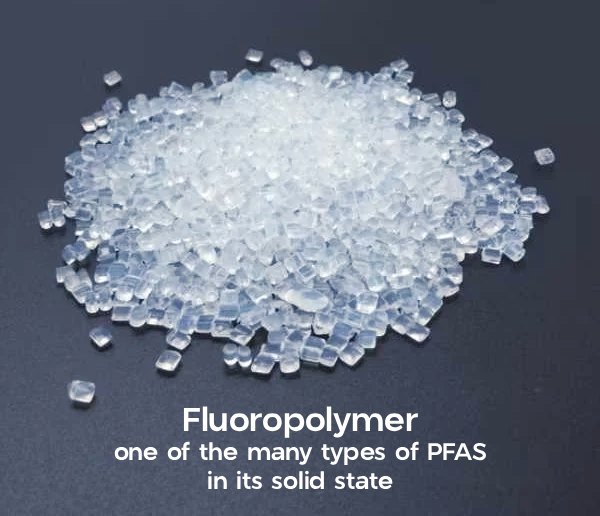
PFAS, short for per- and polyfluoroalkyl substances, are a large group of man-made chemicals used for decades in industrial processes and consumer products. Their defining characteristic is an extremely strong carbon-fluorine bond that does not readily break down in the environment or the human body.
This persistence is why PFAS are often referred to as “forever chemicals.” Once released, they accumulate in surface water, groundwater, soil, wildlife, and human blood.
Modern toxicology has shown that PFAS can cause harm at extraordinarily low concentrations. There is growing scientific agreement that there is no truly safe level of PFAS exposure. Health impacts associated with PFAS include immune system suppression, elevated cholesterol, liver damage, developmental effects in children, and increased cancer risk.
Because of this, the U.S. Environmental Protection Agency has set enforceable drinking water limits for certain PFAS compounds as low as 4 parts per trillion, a threshold far lower than older advisory levels. To put that into perspective, one part per trillion is roughly equivalent to one drop of water in 20 Olympic-sized swimming pools.
Overview of the NC DEQ PFAS Study
The NC DEQ study was performed in 2023 as a pilot project. According to the agency, its goal was to improve understanding of the sources of PFAS pollution and how these chemicals move through wastewater treatment systems and biosolids.
The study had three core objectives:
- Investigate the prevalence of PFAS in wastewater treatment systems at selected sites in North Carolina.
- Examine PFAS in wastewater influent, effluent, biosolids, and soils where biosolids have been repeatedly land-applied.
- Generate foundational data for public information, future minimization efforts, and regulatory decision-making.
DEQ is clear that this was an exploratory study and not intended to establish regulatory limits. However, the data still provides a critical snapshot of real-world PFAS movement through municipal and industrial systems.
Facilities Sampled and Methodology
Sampling was conducted at 37 wastewater treatment facilities and 19 regulated land application fields. Facilities were selected based on size and operating characteristics, not randomly, due to available resources and partnerships with host sites.
The wastewater treatment plants fell into three categories:
- 100 percent domestic wastewater treatment plants
- Municipal wastewater treatment plants that receive a mix of residential, commercial, and industrial wastewater
- Industrial wastewater treatment plants
Samples were collected from influent entering the plants, effluent leaving the plants, biosolids produced during treatment, and soils at fields where biosolids had been applied repeatedly over time.
The study analyzed a wide range of PFAS compounds, with total PFAS concentrations reflecting the sum of up to 57 quantified PFAS chemicals.
What the State Found in Wastewater Influent and Effluent
One of the most important findings is that PFAS are not being eliminated by wastewater treatment. In many cases, concentrations leaving treatment plants were higher than concentrations entering them.
According to the study:
- 88 percent of influent samples exceeded 4 ppt for PFOA or PFOS
- 90 percent of effluent samples exceeded 4 ppt for PFOA or PFOS
Mean total PFAS concentrations in effluent were higher than influent across all categories of treatment plants.
To summarize the results more clearly, the table below reflects statewide trends observed by NC DEQ:
| Facility Type | Mean Total PFAS Influent (ppt) | Mean Total PFAS Effluent (ppt) |
|---|---|---|
| 100% Domestic | 80 | 192 |
| Municipal | 380 | 533 |
| Industrial | 276 | 663 |
These results matter because wastewater effluent is discharged directly into surface waters that serve as drinking water sources downstream. The study estimates that 87 to 98 percent of total quantified PFAS leaving wastewater treatment plants ends up in liquid effluent, not in biosolids.
In plain terms, most PFAS entering these systems is flowing straight into rivers, lakes, and reservoirs.
PFAS in Biosolids and Soil
The study also confirmed PFAS presence in biosolids and in soils where biosolids have been repeatedly applied.
PFOS was detected in biosolids at concentrations consistent with or comparable to those found in other states. PFOS was also detected in soils at land application fields across domestic, municipal, mixed-use, and industrial sources.
These findings are important because biosolids are commonly land-applied or distributed as soil amendments. While regulations focus on pathogens and nutrients, there are currently no federal or North Carolina limits for PFAS in biosolids.
Why This Data Changes the Legal Landscape
This study represents something municipalities did not previously have: state-published, publicly available evidence documenting PFAS contamination across wastewater systems and land-applied materials.
For cities, towns, utilities, and counties, this data matters for several reasons:
- It establishes that PFAS contamination is widespread, not isolated
- It confirms that treatment systems are not removing PFAS
- It shows contamination at levels that exceed modern health-based thresholds
- It documents pathways into surface water and soil
Municipalities did not manufacture PFAS. They did not design treatment systems to remove chemicals that companies failed to disclose for decades. Yet local governments are now being forced to pay for testing, treatment upgrades, alternative water supplies, and long-term monitoring.
Courts increasingly recognize that these costs should be borne by the companies that created and released PFAS into commerce and the environment.
Why Testing Comes First
The strength of any municipal PFAS claim begins with data. The amount and type of PFAS present in a water system can directly affect the scope of damages and the recovery available.
State studies like the NC DEQ report help establish baseline contamination, but municipalities still need system-specific testing to fully understand exposure and liability.
Deadlines for PFAS-related claims are approaching quickly. Waiting does not reduce responsibility or costs. It only reduces options.
How Stag Liuzza Can Help Municipalities Move Forward
Stag Liuzza is representing municipalities across the country seeking accountability for PFAS contamination. The firm helps local governments understand their exposure, coordinate testing, preserve evidence, and pursue recovery from PFAS manufacturers so that taxpayers are not left paying for corporate pollution.
If you work for a city, town, county, or water authority in North Carolina, now is the time to learn what this data means for your community.
The process begins with information, not litigation.
To learn more, visit https://www.cleangroundwater.com/ or call 888-513-7545 to speak with the Stag Liuzza team.
Clean drinking water is a basic responsibility. The cost of fixing PFAS contamination should not fall on municipalities that did not create the problem.